










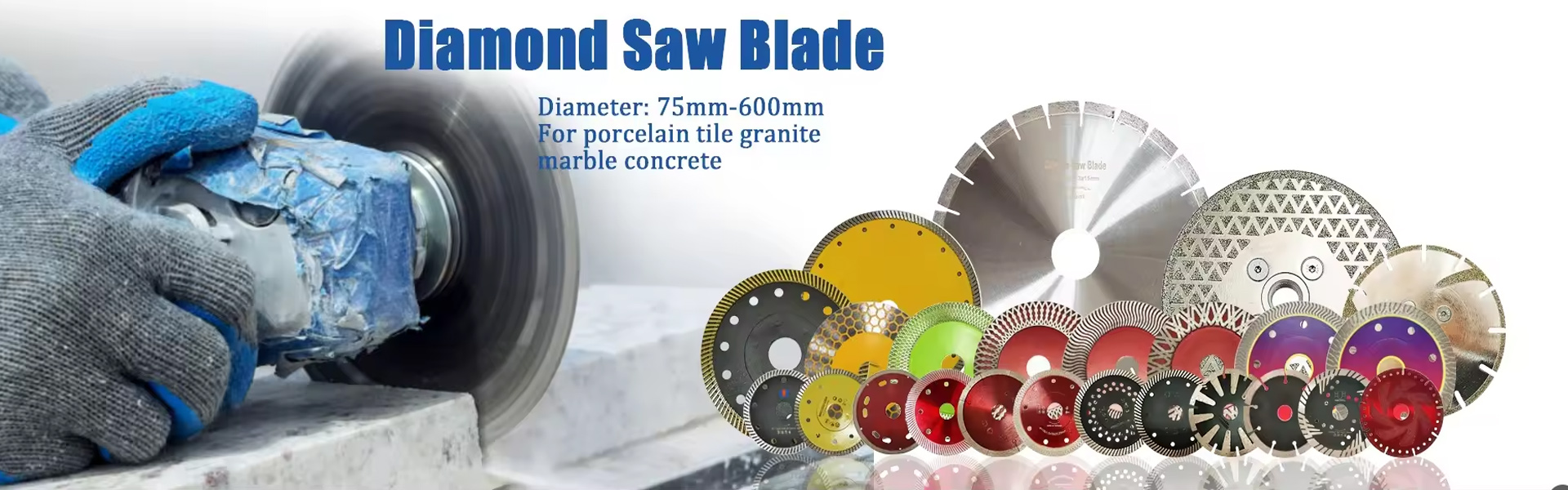
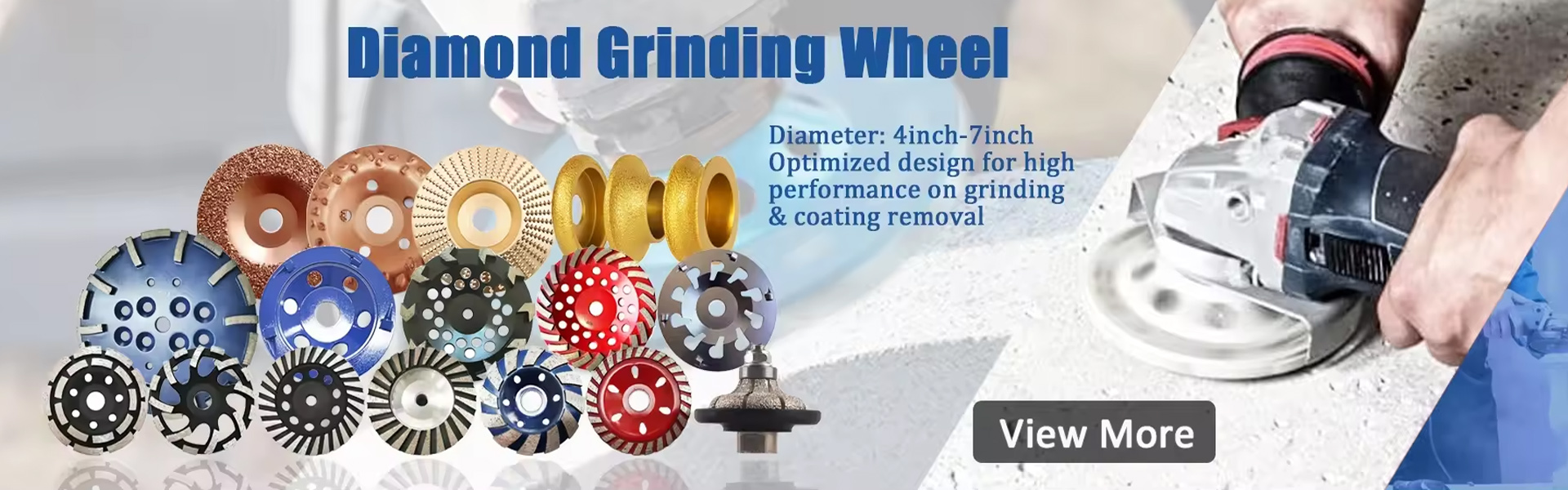
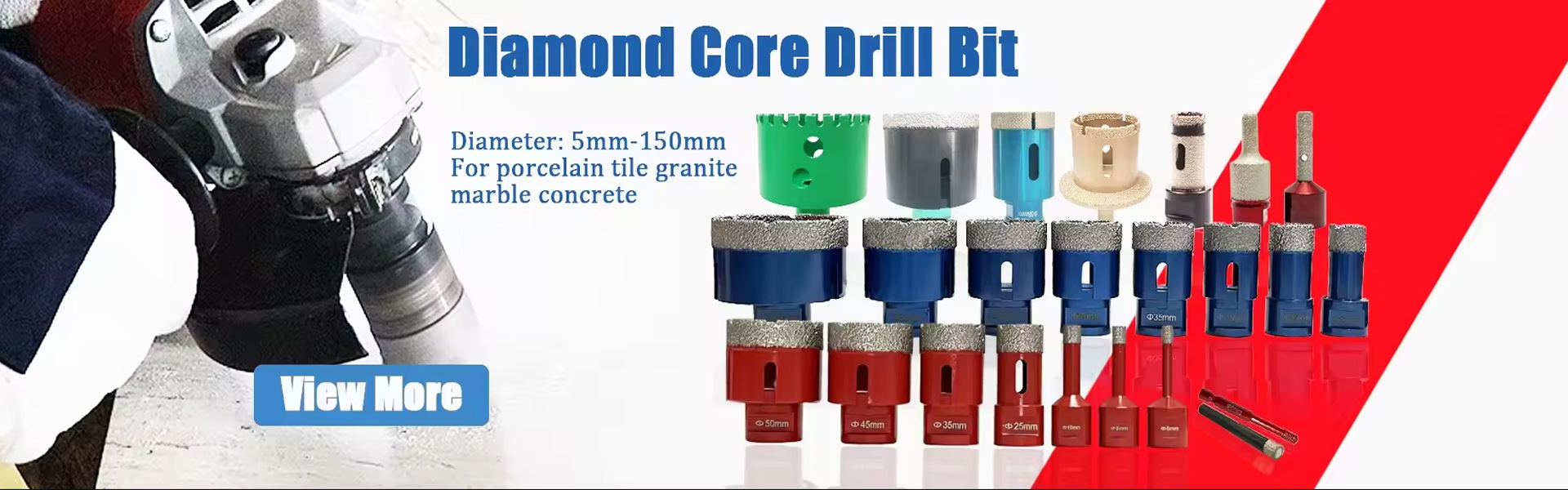
How can the lifespan of a diamond saw blade be extended?
Diamond saw blades are indispensable tools in stone mining and processing. Their efficiency and service life are determined by many factors, but generally include the following parameters:
(1) Saw blade linear speed: In practical work, the linear speed of a diamond circular saw blade is limited by equipment conditions, saw blade quality, and the properties of the stone being cut. From the perspective of saw blade service life and cutting efficiency, the linear speed of the saw blade should be selected according to the properties of different stones. When sawing granite, the saw blade linear speed can be selected within the range of 25m~35m/s. For granite with high quartz content that is difficult to saw, the lower limit of the saw blade linear speed is preferable. When producing granite facing bricks, the diameter of the diamond circular saw blade used is smaller, and the linear speed can reach 35m/s.
(2) Cutting depth: Cutting depth is an important parameter involving diamond wear, effective cutting, saw blade stress, and the properties of the stone being cut. Generally speaking, when the linear speed of a diamond circular saw blade is high, a small cutting depth should be selected. Currently, the cutting depth for diamond cutting can be chosen between 1mm and 10mm. When sawing granite blocks with a large-diameter saw blade, the cutting depth can usually be controlled between 1mm and 2mm, and the feed rate should be reduced. When the linear speed of the diamond circular saw blade is large, a large cutting depth should be selected. However, within the limits of the saw's performance and tool strength, a larger cutting density should be used to improve cutting efficiency. When there are requirements for the machined surface, a small depth of cut should be used.
(3) Feed Rate: The feed rate is the speed at which the stone is being sawn. Its magnitude affects the sawing rate, the force on the saw blade, and the heat dissipation in the sawing zone. Its value should be selected based on the properties of the stone being sawn. Generally speaking, for sawing softer stones, such as marble, the feed rate can be appropriately increased; if the feed rate is too low, it is more conducive to improving the sawing rate. For sawing fine-grained, relatively homogeneous granite, the feed rate can be appropriately increased; if the feed rate is too low, the diamond cutting edge will easily wear down. However, when sawing coarse-grained granite with uneven hardness, the feed rate should be reduced; otherwise, it will cause saw blade vibration, leading to diamond breakage and reducing the sawing rate. The feed rate for sawing granite is generally selected within the range of 9m to 12m/min.
 Super Thin 115mm Diamond Cutti
 Professional Diamond Core Dril
 Premium Diamond Drill Bits for
 Diamond Grinding Disc Sets New