













How can multi-blade saws be used more safely?
Multi-blade saws, frequently used in the timber industry, often cause injuries and losses to businesses due to improper operation caused by their high-speed rotation. So how can we reduce and avoid such accidents?
We need to understand saw blades. A saw blade consists of several teeth. Sharp teeth, a complete set of teeth, and an intact blade are basic requirements for use. If any teeth are missing, they must not be missing consecutively. Furthermore, if the saw blade develops cracks during use, its use must be stopped. Additionally, manufacturers usually punch anti-crack holes at the end of the saw blade; if these holes are missing, the saw cannot be used, especially on multi-blade saws.
Only after ensuring the saw blade meets the above conditions can we start operation. Before sawing timber, ensure the saw blade speed is normal, and that the timber does not vibrate. If encountering hard knots, feed the timber at a constant speed. Multi-blade saws use a constant-speed feeding system, which can prevent this.
When the saw blade temperature becomes too high, it needs to be cooled with cold water. For saw blades with a diameter of 600mm or more, water spray cooling is required when the rotation speed reaches 2000 rpm. After work is completed, press the emergency stop button and turn off the main power switch.
Additionally, if not using a multi-blade saw but operating manually, be careful to adjust slowly if the saw kerf deviates. Do not forcefully turn the saw blade to prevent accidents. For equipment with exposed saw blades, operators and related personnel must not stand facing the direction of the centrifugal force of the rotating saw blade, and arms must not be crossed over the saw blade while working.
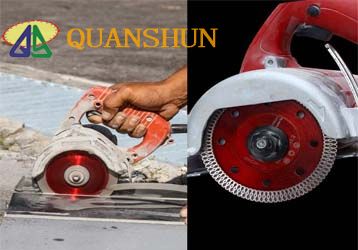 Super Thin 115mm Diamond Cutti
 Professional Diamond Core Dril
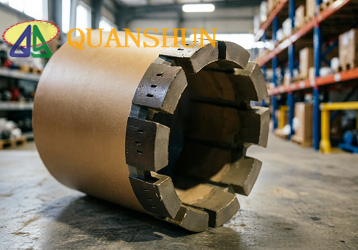 Premium Diamond Drill Bits for
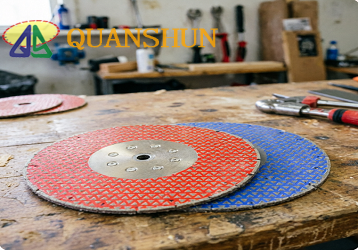 Diamond Grinding Disc Sets New