









The challenge of cutting thin-walled aluminum! How can specialized aluminum saw blades avoid problems like deformation and burrs?
Thin-walled aluminum (typically 0.5-3mm thick) is widely used in aerospace, electronics, and furniture hardware due to its light weight and high strength. However, cutting it presents two major challenges: first, the thin walls and poor rigidity of aluminum make it prone to deformation under cutting stress (such as concave cut surfaces or overall bending); second, the relatively soft texture of aluminum causes aluminum shavings to easily adhere to the saw blade teeth, resulting in burrs (rough edges and saw marks), which not only affect product appearance but may also lead to assembly errors.
Dedicated aluminum cutting saw blades, through targeted tooth design, material selection, and process optimization, can fundamentally alleviate these two problems. This article will delve into the causes of the pain points in cutting thin-walled aluminum and the core technologies of dedicated aluminum cutting saw blades for "anti-deformation and burr removal," while also providing practical usage suggestions to help companies improve cutting quality.
I. First, understand the core causes of "deformation and burrs" in thin-walled aluminum materials
To solve cutting problems, it's essential to first identify the key factors behind the pain points—most problems don't originate from the aluminum material itself, but rather from a "mismatch" between the saw blade and the cutting process:
1. Deformation: stemming from "uneven cutting force" and "insufficient heat dissipation"
The rigidity of thin-walled aluminum materials is far lower than that of thick-walled aluminum materials. If the pressure or friction applied by the saw blade is unevenly distributed during cutting, it can easily lead to localized deformation of the aluminum material. There are two main contributing factors:
**Inadequate saw blade tooth design:** Ordinary aluminum saw blades often employ a "deep tooth, large rake angle" design. During cutting, the "biting force" of the teeth on the aluminum material is concentrated in a localized area. Thin-walled aluminum materials cannot withstand this concentrated stress, easily resulting in dented cut surfaces or overall bending (for example, when cutting 1mm thick aluminum sheets, an ordinary saw blade may bend the edges).
**Excessive cutting temperature:** Aluminum has high thermal conductivity, but thin-walled aluminum materials have a small heat dissipation area. During cutting, the frictional heat between the saw blade and the aluminum material easily accumulates near the cut, causing localized softening of the aluminum material (the softening temperature of aluminum is approximately 300℃). Softened aluminum is more easily deformed under the pressure of the saw blade.
2. Burrs: Originating from "Aluminum Shavings Adhesion" and "Tooth Wear"
Aluminum is relatively soft, and aluminum shavings produced during cutting easily adhere to the saw blade teeth. If the saw blade cannot remove the chips in time or the teeth wear down, burrs will form on the cut surface:
Insufficient Chip Removal Capacity: The tooth groove (chip-holding space) design of ordinary saw blades is not optimized for thin-walled aluminum. Aluminum shavings easily clog the tooth grooves, and subsequent saw cuts will "press" the adhered aluminum shavings into the cut surface, forming burrs;
Incompatible Tooth Coating or Material: If the saw blade teeth lack a wear-resistant coating or the material hardness is insufficient, the tooth tips easily wear down and become blunt during cutting. Blunt teeth cannot achieve "precise cutting" and instead "tear" the aluminum surface, producing irregular burrs (for example, when a high-speed steel saw blade is uncoated, the burr rate increases by 40% after 50 cuts due to tooth wear).
II. Core Design of Dedicated Aluminum Cutting Saw Blades: Anti-Deformation and Deburring
Dedicated aluminum cutting saw blades are optimized for the characteristics of thin-walled aluminum materials from four dimensions: tooth shape, material, coating, and process, forming a targeted solution:
1. Tooth Shape Design: "Shallow Teeth + Dense Teeth + Low Rake Angle" to Reduce Stress and Adhesion
Tooth shape is the core factor affecting cutting quality. Dedicated saw blades alleviate deformation and burrs through three design features:
Shallow Teeth + Narrow Tooth Groove: Reducing tooth depth from 8-10mm in ordinary saw blades to 4-6mm, and narrowing tooth groove width to 3-4mm—The shallow tooth design reduces the "bite depth" of the saw teeth into the aluminum material, dispersing cutting stress and avoiding excessive local stress on thin-walled aluminum materials; the narrow tooth groove accelerates the aluminum chip removal speed and reduces aluminum chip adhesion (for example, when cutting 2mm thick aluminum profiles, the deformation rate of shallow tooth saw blades can be reduced by 60%);
Dense Tooth Layout: Increased number of teeth compared to ordinary saw blades 30%-50% (e.g., for a 120mm diameter saw blade, standard models have 40-60 teeth, while specialized models have 80-100 teeth) – The close-tooth design reduces the cutting load on each tooth, resulting in a smoother cut. Simultaneously, the coordinated cutting action of multiple teeth produces a flatter cut surface and reduces burrs.
Low rake angle design: Reducing the rake angle of the saw teeth from 15°-20° in standard saw blades to 8°-12° – A low rake angle prevents the saw teeth from "forcefully biting" into the aluminum material, instead cutting it off gently. This reduces deformation caused by sudden stress, making it especially suitable for ultra-thin aluminum materials of 0.5-1mm.
Some high-end specialized saw blades also employ a combination design of alternating teeth and circular arc teeth: the alternating teeth handle the main cutting, while the circular arc teeth perform a "secondary trimming" of the cut surface, further reducing burrs and controlling the surface roughness (Ra) to below 1.6μm (the Ra of ordinary saw blades is typically 3.2-6.4μm).
2. Material Selection: "Carbide + Fine Grain" for Enhanced Wear Resistance and Cutting Precision
The teeth of specialized aluminum saw blades are typically made of "ultra-fine grain cemented carbide" (WC-Co alloy, grain size 0.5-1μm), rather than ordinary high-speed steel or coarse grain cemented carbide:
Higher Hardness and Wear Resistance: Ultra-fine grain cemented carbide achieves a hardness of HRA92-93 (compared to HRA89-91 for ordinary coarse grain cemented carbide). This reduces tooth wear during cutting, ensuring the teeth remain sharp even after 200 consecutive cuts of thin-walled aluminum, preventing burrs caused by blunt teeth.
Better Toughness: Slight vibrations may occur during the cutting of thin-walled aluminum. Ultra-fine grain cemented carbide has 20% higher toughness than ordinary cemented carbide, allowing it to withstand certain vibration impacts and preventing tooth breakage (ordinary saw blades can experience tooth breakage rates of up to 15% under vibration, while specialized saw blades can reduce this to below 5%).
The blade body is mostly made of high-strength spring steel (such as 65Mn steel) and undergoes a heat treatment process. The flatness error of the blade body is controlled within 0.1mm. A flat blade body ensures that the saw blade rotates at high speed without wobbling during cutting, preventing uneven stress on the aluminum material due to blade misalignment and further reducing deformation.
3. Coating Process: "TiAlN/TiCN Composite Coating," Anti-stick Aluminum + High Temperature Resistance
The teeth of specialized aluminum cutting saw blades are coated with a "anti-stick aluminum + high temperature resistance" composite coating to solve the problems of aluminum chip adhesion and heat dissipation:
Anti-stick Aluminum Properties: The TiAlN (titanium aluminum nitride) or TiCN (titanium carbonitride) coating has an extremely low surface friction coefficient (only 0.2-0.3, compared to 0.6-0.8 for ordinary uncoated carbide), making it difficult for aluminum chips to adhere to the teeth and reducing burr formation; at the same time, the coating surface is smooth, allowing aluminum chips to be quickly discharged from the tooth grooves, avoiding blockage;
High Temperature Resistance Properties: This type of coating has a high temperature resistance of up to 800-1000℃, far exceeding the softening temperature of aluminum. During cutting, it effectively isolates frictional heat, reducing heat transfer to the aluminum and preventing the aluminum from softening and deforming due to temperature rise (actual tests show that when cutting with a saw blade with a TiAlN coating, the temperature of the aluminum near the cut is 50-80℃ lower than that of an uncoated saw blade).
Some specialized saw blades undergo an "ultra-smooth treatment" (such as polishing or nano-coating) on the coating surface to further reduce aluminum chip adhesion, making them particularly suitable for cutting high-purity 1-series and 3-series aluminum materials (which are more adhesive).
4. Precision Grinding Process: "Edge Blunting + Balance Calibration" Enhances Cutting Stability
Specialized saw blades undergo two key precision grinding processes before leaving the factory to ensure cutting stability:
Edge Blunting Treatment: The saw blade edges undergo "micro-blunting" (edge radius 0.02-0.05mm), instead of the "sharp edge" of ordinary saw blades. This seemingly contradictory design is actually to prevent sharp edges from "tearing" the aluminum material (especially soft aluminum) when cutting thin-walled aluminum. The micro-blunted edge enables "shearing" and reduces burrs.
Dynamic Balance Calibration: The saw blade is calibrated using a "double-sided dynamic balancer," with balance accuracy controlled at G2.5 level (unbalance ≤5g・mm at 3600r/min). A balanced saw blade rotates smoothly at high speeds without shaking, and the cutting pressure is evenly distributed on the aluminum surface, avoiding localized deformation caused by sway.
III. Practical Suggestions: Maximize Saw Blade Performance with the Correct Cutting Process
To maximize the effectiveness of a dedicated aluminum saw blade, it's crucial to use a suitable cutting process. Otherwise, even with a well-designed saw blade, deformation or burrs may still occur:
1. Control Cutting Parameters: "Low Speed + Slow Feed" to Reduce Stress and Heat
For thin-walled aluminum cutting, avoid "high speed, fast feed" (common parameters for thick-walled aluminum). Recommended parameters:
Speed: Adjust according to the saw blade diameter. For example, for a 120mm diameter saw blade, control the speed at 2800-3200 rpm (ordinary saw blades can reach 4000 rpm when cutting thick-walled aluminum) – Low speed reduces frictional heat between the saw blade and the aluminum, preventing softening.
Feed Speed: Control at 0.5-1 m/min (1.5-2 m/min for ordinary saw blades) – Slow feed allows sufficient time for chip removal and reduces instantaneous cutting force, preventing aluminum deformation.
For example, when cutting 1mm thick 3003 series aluminum sheets, using a 120mm diameter, 80-tooth specialized saw blade, a rotation speed of 3000 rpm, and a feed rate of 0.8 m/min, the deformation rate can be controlled within 0.1mm, and the burr rate is less than 5%.
2. Optimized Fixtures and Cooling: "Flexible Fixture + Spray Cooling" to Prevent Deformation
Fixture Selection: Use "flexible fixtures" (such as rubber pads or nylon clamps) to fix the aluminum material, rather than rigid metal clamps. Flexible fixtures can distribute the fixing pressure, preventing the fixture from damaging or deforming thin-walled aluminum. Simultaneously, the fixture must cover the "non-cutting area" of the aluminum material to ensure that the aluminum material does not wobble during cutting.
Cooling Method: Use "water-soluble cutting fluid spray cooling" (rather than oil mist cooling). The spray nozzle must be aimed at the saw blade teeth and the cutting edge. The cutting fluid can remove cutting heat and lubricate the teeth, reducing aluminum chip adhesion. Water-soluble cutting fluid also prevents oil stains from adhering to the aluminum surface, facilitating subsequent processing.
3. Regular Saw Blade Maintenance: "Timely Cleaning + Proper Sharpening" Extends Lifespan and Improves Efficiency
Cleansing After Each Cut: After cutting, use a high-pressure air gun to blow away any residual aluminum shavings from the saw blade's tooth grooves. Then wipe the teeth with a neutral detergent to prevent aluminum shavings from oxidizing and sticking to the teeth (oxidized aluminum shavings form hard aluminum oxide, which wears down the teeth).
Sharpening Timing and Method: When the saw blade exhibits increased burrs, increased noise, and increased cutting resistance during cutting, it needs to be sharpened promptly. It is recommended to use a dedicated sharpening machine and sharpen the blade according to the original tooth shape and rake angle parameters to avoid self-sharpening, which can deform the tooth shape (the lifespan of a sharpened saw blade can be restored to more than 80% of that of a new saw blade).
Conclusion: Choosing the Right Saw Blade + Matching the Right Process Makes Cutting Thin-Walled Aluminum Materials Easier
The problems of "deformation and burrs" in thin-walled aluminum materials are essentially the result of "mismatch between saw blade design and aluminum material properties" and "incoordination between process parameters and cutting requirements." Specialized aluminum saw blades address core pain points at their source through a combination of shallow, dense teeth, ultra-fine carbide, anti-stick coating, and precision grinding. Combined with a practical approach of low-speed, slow-feed, flexible fixing, and regular maintenance, they achieve high-quality cuts with low deformation and burr-free edges.
When selecting specialized aluminum saw blades, businesses must consider the thickness of the aluminum material being cut (e.g., 0.5mm ultrathin vs. 3mm thin-walled), the material (e.g., soft 1-series vs. hard 6-series), and the required cutting precision. They should choose a saw blade with the appropriate tooth shape, number of teeth, and coating, rather than blindly pursuing the most expensive option. Only a perfect match between the saw blade and the cutting process can truly overcome the challenges of cutting thin-walled aluminum.
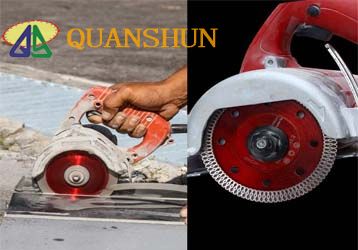 Super Thin 115mm Diamond Cutti
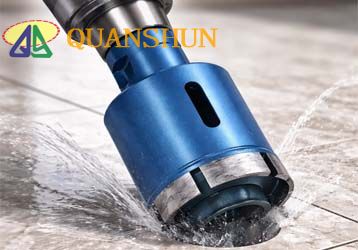 Professional Diamond Core Dril
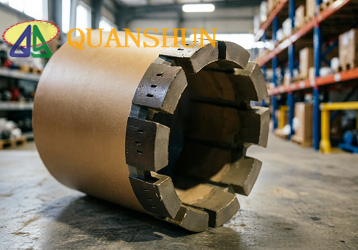 Premium Diamond Drill Bits for
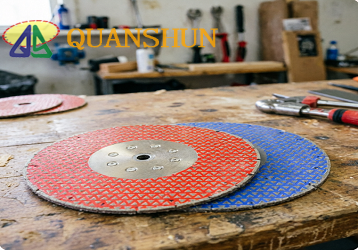 Diamond Grinding Disc Sets New